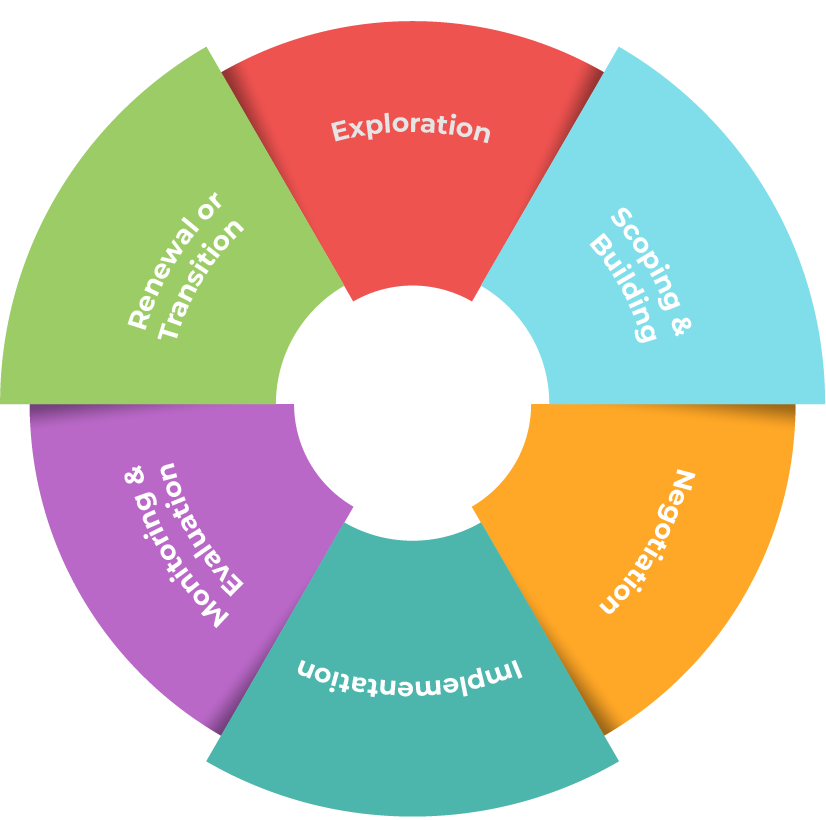
Partnering lifecycle
APRC applies a structured partnership lifecycle framework to ensure that collaborations are transparent, accountable and results-oriented from inception to closure. All partnerships undergo due diligence, clear scoping and agreed performance measures before engagement. Clear scopes of work, performance indicators and contractual safeguards are established at the outset.
Adopting a partnering lifecycle at APRC helps optimise collaboration, resource utilisation and impact assessment, advancing the Centre’s goals of promoting regulatory coherence and sustainable development across the Asia-Pacific.
Upon completion, partnerships undergo formal close-out procedures, including financial acquittal, asset reconciliation (if relevant) and compliance confirmation. This lifecycle approach ensures that partnerships are governed by integrity, measurable performance and shared responsibility for sustainable development outcomes.
Engagement model — co-design, accountability and ownership
APRC’s engagement model is built on partnership, institutional strengthening and long-term capacity development. The Centre works collaboratively with governments, regulatory authorities, development partners, academic institutions and civil society stakeholders to support evidence-based reform and sustainable regulatory systems.
Engagement is structured around three core principles: co-design, accountability and institutional ownership. Projects are developed through structured consultation with counterpart agencies to ensure alignment with national priorities, regulatory mandates and development strategies. Stakeholder mapping is conducted at the outset of each engagement to identify affected groups, institutional interfaces and potential risk considerations, including gender, disability and social inclusion (GEDSI) factors.
APRC prioritises transparent communication and defined roles within all engagements. Memoranda of understanding, contractual agreements or project inception reports establish scope, performance expectations, reporting requirements and safeguarding obligations.
During implementation, APRC maintains continuous engagement through:
- Regular progress reporting and technical review meetings
- Risk and compliance monitoring, including safeguarding oversight
- Capacity-building workshops and knowledge transfer sessions
- Feedback loops with implementing agencies and stakeholders
- Adaptive management informed by data and institutional learning